
Views: 7
Snow Leopard: The Elusive Ghost of the Mountains


10
Hidden among the towering peaks of Central Asia and the Himalayas lives one of the world’s most mysterious predators: the snow leopard (Panthera uncia).
Known as the Ghost of the Mountains, this remarkable big cat is famous for its exceptional camouflage, powerful climbing abilities, and elusive nature. Even experienced wildlife researchers can spend weeks searching mountain valleys without seeing one.
Yet behind its mysterious reputation lies an extraordinary animal perfectly adapted to survive in some of the harshest environments on Earth.
Snow Leopard Facts at a Glance
Scientific name
Panthera uncia
Conservation status
Vulnerable
Typical weight
30–50 kg
Body length
90–120 cm
Tail length
80–100 cm
Primary diet
Wild sheep and goats
Main habitat
High Asian mountains
Lifestyle
Mostly solitary
Physical measurements and conservation classification: IUCN Cat Specialist Group.
IUCN CatSG
+1
1. Where Do Snow Leopards Live?


12
Snow leopards inhabit rugged mountain landscapes across 12 countries, including China, Mongolia, Nepal, India, Pakistan, Bhutan, Afghanistan, Kazakhstan, Kyrgyzstan, Tajikistan, Uzbekistan, and Russia.
They are commonly found at elevations of approximately 2,700–5,000 metres, although their altitude varies considerably by region and season.
These animals prefer steep cliffs, rocky ridges, deep valleys, and remote alpine landscapes. Such terrain gives them natural protection and excellent vantage points for hunting.
Their habitat may appear lifeless from a distance, but it supports an intricate ecosystem of mountain goats, wild sheep, small mammals, and hardy plants.
WWF
+1
2. Extraordinary Adaptations for Survival

Thick fur and natural camouflage
Their dense, smoky-gray fur provides insulation, while dark rosettes break up their outline against rocks and snow.

An exceptionally long tail
Their thick tails help maintain balance on narrow mountain ledges and can wrap around their bodies for warmth.

Natural snowshoes
Large, fur-covered paws distribute body weight across soft snow and provide traction on challenging ground.

Powerful jumping muscles
Strong hind legs allow snow leopards to leap remarkable distances, helping them traverse rocky slopes and surprise prey.
These specialized features make snow leopards exceptionally capable mountain predators.
WWF
+1
3. What Do Snow Leopards Eat?
Snow leopards are carnivores and skilled ambush hunters. They rely on stealth, camouflage, and the element of surprise rather than prolonged chases.
Their prey includes:
- Blue sheep, also known as bharal
- Siberian ibex and other wild goats
- Argali and other mountain sheep
- Marmots, pikas, and hares
- Occasionally domestic livestock
They typically stalk prey from above or from behind rocky cover before launching a sudden attack.
As apex predators, snow leopards play an important role in regulating herbivore populations and supporting the balance of high-altitude ecosystems.
WWF
+1
4. Why Are They Called Ghosts of the Mountains?

Imagine standing on a Himalayan ridge and looking across hundreds of metres of broken rock. Somewhere in that landscape, a snow leopard might be watching you without making the slightest movement.
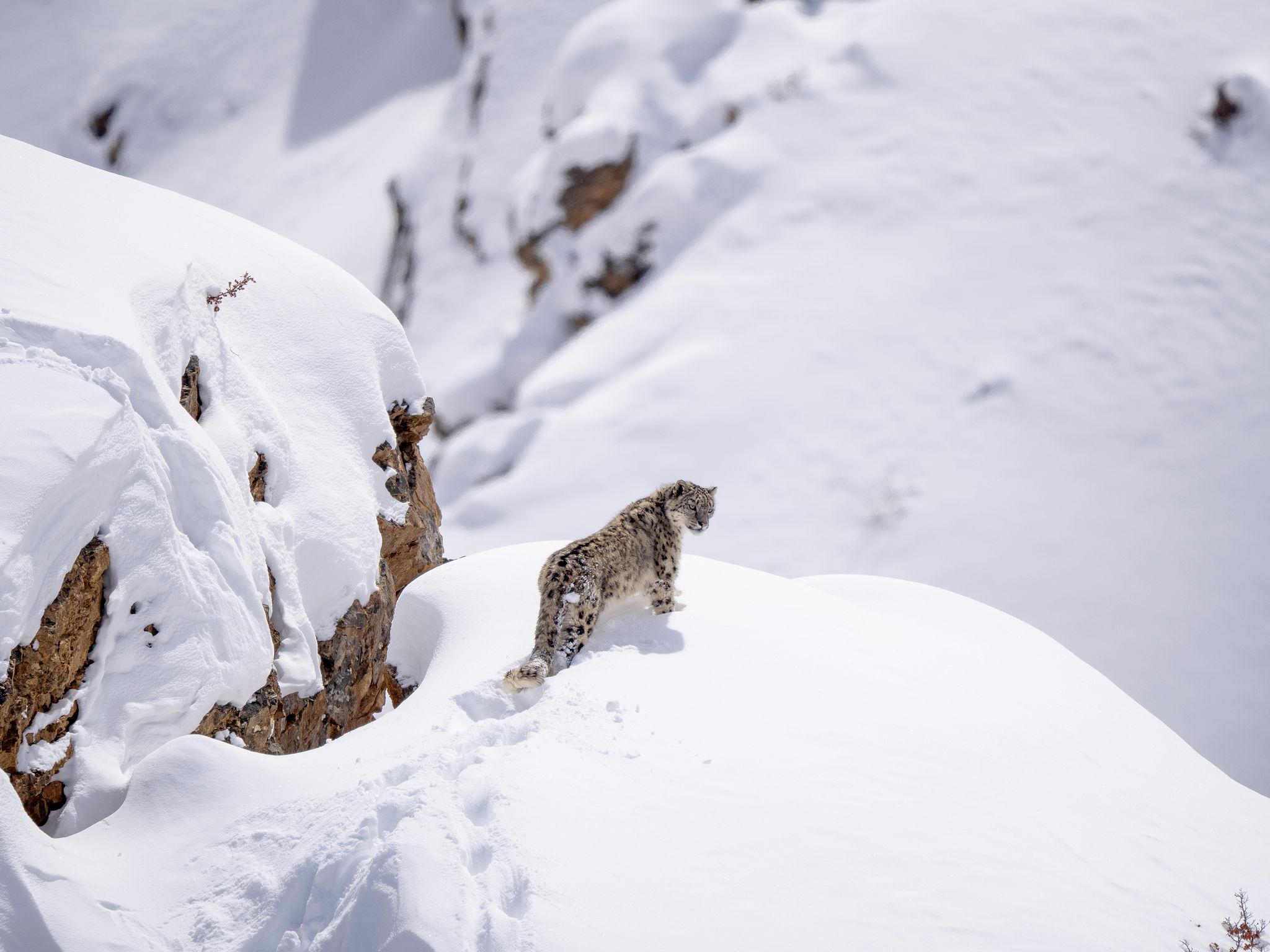
Its patterned coat blends naturally with the surrounding terrain. Combined with a solitary lifestyle, extraordinary patience, and remote habitat, this camouflage makes encounters rare.
Snow leopards are generally most active around dawn and dusk. Unlike lions and tigers, they cannot produce a true roar, communicating instead through vocalizations such as chuffs, growls, and calls.
United Nations
+1
5. Life of a Snow Leopard Cub


9
Female snow leopards usually give birth in sheltered rocky dens, commonly during the spring or early summer.
A litter may contain one to five cubs. The young are born helpless and remain dependent on their mother as they develop strength, coordination, and hunting skills.
Over many months, the cubs learn to navigate rocky slopes, recognize prey, and survive independently.
Unlike social big cats such as lions, adult snow leopards generally live alone, coming together mainly for mating.
IUCN CatSG
+1
6. Why Are Snow Leopards Threatened?
Although snow leopards inhabit remote mountainous regions, human activity increasingly affects their survival.
| Major threat | Impact |
|---|---|
| Habitat fragmentation | Roads, mining, and development disrupt movement corridors |
| Climate change | Alters alpine ecosystems and the distribution of suitable habitat |
| Retaliatory killing | Herders may kill predators after losing livestock |
| Declining wild prey | Reduces the animals available for hunting |
| Poaching | Illegal hunting and wildlife trade threaten populations |
The snow leopard is classified as Vulnerable on the IUCN Red List.
Population estimates vary because much of its enormous range is difficult to survey. The IUCN Cat Specialist Group reports a recent estimate of approximately 7,446–7,996 total individuals, including about 2,710–3,386 mature animals, while other conservation organizations publish lower figures. These estimates should not be treated as precise counts.
IUCN CatSG
+2
7. Protecting the Ghost of the Mountains
Conservation efforts increasingly combine scientific research with partnerships involving local mountain communities.
Camera traps, genetic analysis, and GPS tracking help researchers understand snow leopard movements and population trends. Meanwhile, improved livestock enclosures, community insurance programs, education, and habitat protection can reduce conflict with herders.
Organizations including the Snow Leopard Trust and World Wildlife Fund support conservation programs throughout the species’ range.
Protecting snow leopards also benefits other mountain wildlife and helps preserve fragile ecosystems that support local communities.
WWF
+1
8. Five Fascinating Facts
- Snow leopards cannot roar like lions. Their vocal anatomy produces a different range of sounds.
- Their tails are almost as long as their bodies. These provide balance and extra insulation.
- They can jump up to six times their body length. Powerful hind legs help them cross difficult mountain terrain.
- They are extremely difficult to count. Their camouflage, low population densities, and remote habitat complicate scientific surveys.
- October 23 is International Day of the Snow Leopard. The United Nations formally established the observance in 2024.
WWF+2
Conclusion: A Symbol of Wild Mountain Wilderness
The snow leopard represents the beauty, resilience, and mystery of Earth’s highest mountain landscapes.
Its survival depends not only on protecting individual animals but also on maintaining the ecosystems, wildlife populations, and human communities that share its environment.
Preserving the Ghost of the Mountains means ensuring that future generations can inherit a world in which these remarkable predators still roam free.
Website SEO Package
SEO title
Snow Leopard: The Elusive Ghost of the Mountains
Suggested URL slug
snow-leopard-ghost-of-the-mountains
Meta description
Discover the mysterious snow leopard, its Himalayan habitat, unique survival adaptations, hunting behavior, and the conservation efforts protecting this rare big cat.
Primary keyword
snow leopard
Secondary keywords
ghost of the mountains, snow leopard facts, snow leopard habitat, Panthera uncia, snow leopard conservation
Suggested category
Wildlife → Mammals → Big Cats
Featured image alt text
Snow leopard standing on a rugged snow-covered mountain ridge in its natural Asian habitat.
Research and Media Sources
For the Animals website publishing workflow, useful reference sources include the Snow Leopard Trust, WWF species profile, IUCN Cat Specialist Group, and United Nations snow leopard observance.
Suggested video research: BBC Earth snow leopard footage and Snow leopard conservation documentaries. These are discovery links, not verified publication-ready video embeds.
Publishing note: The article is ready for editorial review. The wildlife images above are visual references; their reuse permissions have not been verified, and the article has not been published to WordPress.