
Views: 8
BIN3AIAH ANIMALS · WILDLIFE ARTICLE
Cheetah: The Fastest Land Animal Explained


10
The cheetah (Acinonyx jubatus) is the fastest land animal on Earth, a remarkable predator built for explosive acceleration, agile turns, and high-speed hunting. Its flexible backbone, long legs, specialized claws, and powerful muscles allow it to reach extraordinary speeds over short distances.
But speed is only part of the cheetah’s story. This elegant spotted cat is also a vulnerable species whose survival depends on protecting its natural habitats.
Quick facts about the cheetah
Scientific name
Acinonyx jubatus
Maximum speed
Approx. 100–110 km/h
Adult weight
23–65 kg
Diet
Carnivore
Primary range
Africa, with a remnant population in Iran
Conservation status
Vulnerable (IUCN)
Speed figures vary by measurement and source. Approximately 100–110 km/h is a useful headline range, not a speed sustained during everyday hunting.
IUCN CatSG
+2
1. How fast can a cheetah run?
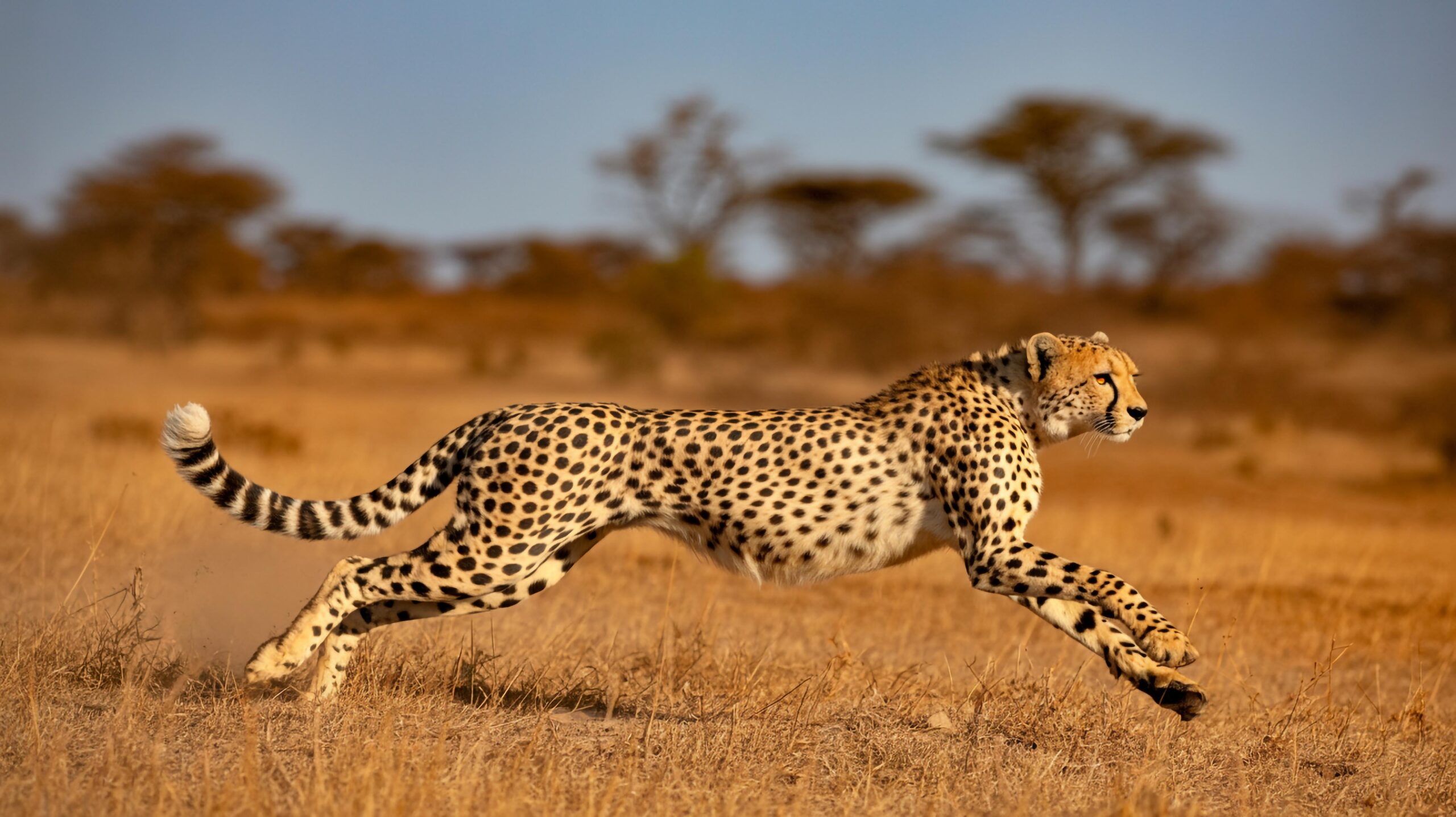
Cheetahs can reach speeds approaching 100–110 km/h, with some published estimates extending higher. They accelerate astonishingly quickly, but can maintain their fastest pace for only brief sprints.
Scientific tracking has shown that hunting success depends on more than maximum speed. Acceleration, rapid braking, balance, and the ability to follow an unpredictable animal are equally important.
A cheetah rarely needs to run at its absolute maximum speed. Instead, it uses an efficient combination of stalking, sprinting, and sharp turns to capture prey.
National Zoo
+1
2. What makes cheetahs so fast?

Flexible backbone and long legs
The spine extends and contracts like a spring, allowing the cheetah to cover tremendous distances in each stride.

Specialized paws and claws
Semi-retractable claws help grip the ground, while tough foot pads increase traction during sudden changes in direction.

Long balancing tail
The tail helps stabilize the animal as it makes rapid turns while following moving prey.

Exceptional eyesight
Forward-facing eyes give cheetahs sharp vision for detecting and pursuing prey. Dark facial tear marks may help reduce glare.
These features work together to create an animal uniquely adapted for running, with enlarged airways, lungs, and a cardiovascular system capable of supporting intense bursts of activity.
National Zoo
+1
3. How do cheetahs hunt?

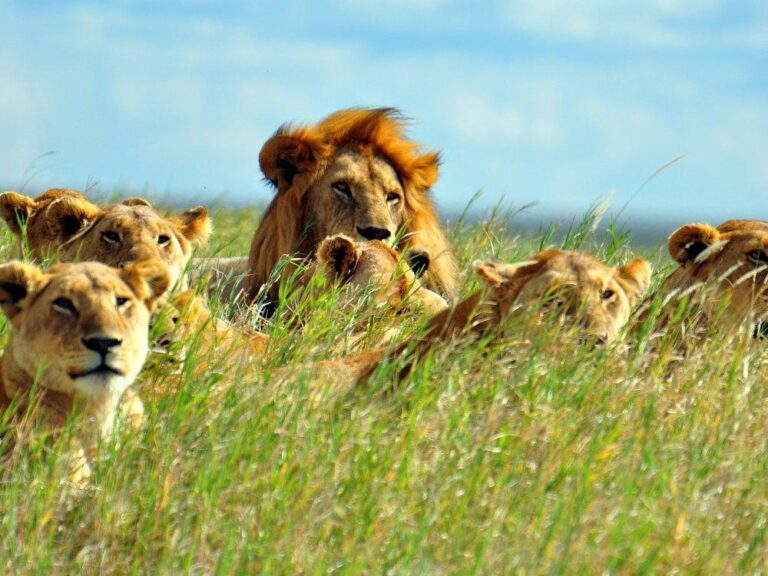
Unlike lions, which frequently hunt in groups, cheetahs generally rely on stealth and speed, although male coalitions can hunt together.
The hunting sequence begins with locating an animal, often a gazelle or other small antelope. The cheetah approaches discreetly, attempting to reduce the distance before suddenly accelerating.
When close enough, it pursues its target, using rapid directional changes to match the prey’s evasive movements. After a successful capture, the cheetah typically subdues the animal with a throat grip.
Cheetahs must often feed quickly because larger competitors, including lions and hyenas, may steal their kills.
National Zoo
+1
4. Where do cheetahs live?
Historically, cheetahs ranged across vast areas of Africa and parts of Asia. Today, wild populations are concentrated mainly in eastern and southern Africa, while a critically endangered Asiatic subspecies survives in Iran.
Cheetahs inhabit grasslands, savannas, dry landscapes, and some shrubland habitats. They need access to prey, suitable hunting areas, and sufficient space to move between territories.
5. Cheetah vs leopard: what’s the difference?

Cheetah
Slender body, solid black spots, distinctive black tear marks, and a physique adapted for speed.

Leopard
Heavier, more muscular build, rosette-shaped markings, strong climbing ability, and powerful ambush-hunting skills.
Although cheetahs and leopards can appear similar from a distance, their hunting strategies and physical structures are very different.
6. Cheetah families and cubs

Female cheetahs usually raise their cubs without the assistance of adult males. Cubs are born vulnerable and develop their hunting skills by observing their mother.
Young cheetahs have a distinctive silvery-gray mantle of fur along their backs, which may help with camouflage. As they mature, their hunting technique improves through play, exploration, and practice.
Adult females are generally solitary except when raising cubs. Males may live alone or form coalitions, particularly with brothers.
7. Why are cheetahs endangered?
Despite their impressive capabilities, cheetahs face serious survival challenges.
Habitat loss and fragmentation reduce the space available for hunting and breeding. Conflict with livestock farmers, illegal wildlife trafficking, and declining prey availability create additional pressure.
The IUCN currently categorizes the species as Vulnerable, while some subspecies face even greater extinction risks. Conservation programs focus on protecting connected habitats, reducing conflict with communities, and preserving wild populations.
IUCN CatSG
+2
8. Interesting cheetah facts
- Cheetahs cannot roar like lions, but they can purr and produce chirping calls.
- Their unique spot patterns can help researchers identify individuals.
- Cheetahs usually hunt during daylight hours, particularly around cooler periods.
- A cheetah’s stride can extend to approximately seven metres during high-speed movement.
- King cheetahs display an unusual coat pattern of larger markings and stripes caused by a genetic variation.
Conclusion
The cheetah represents one of evolution’s most extraordinary examples of specialization. Every aspect of its body contributes to its outstanding running ability, yet being the fastest land animal does not guarantee survival.
Protecting cheetahs means conserving the habitats, prey populations, and ecological relationships that allow these remarkable predators to thrive.
Media package for Bin3aiah Animals
GALLERY PLAN · 10 PHOTOGRAPHS

10
These are visual references for the proposed gallery, not cleared assets for website publication. The publisher should source and verify ten appropriately licensed photographs before upload.
Suggested videos

Overview of cheetah anatomy, speed, and behavior.

Cheetahs – World’s Fastest Animal
National Geographic’s high-speed filming of cheetah movement.

National Geographic Cheetah Feature
Additional educational video reference. Confirm the video embed is available.
WordPress SEO package
| Field | Recommended value |
|---|---|
| Website | animals.bin3aiah.net |
| Title | Cheetah: The Fastest Land Animal Explained |
| Slug | cheetah-fastest-land-animal |
| Focus keyword | cheetah fastest land animal |
| Category | Wild Animals / Mammals |
| SEO title | Cheetah: Speed, Hunting, Facts & Conservation |
| Featured image | Cheetah running at full speed |
| Featured image alt | Cheetah sprinting across the African savanna |
Meta description: Discover how fast cheetahs run, their incredible adaptations, hunting techniques, natural habitats, and why the world’s fastest land animal needs protection.
Suggested tags: Cheetah, Fastest Land Animal, African Wildlife, Big Cats, Animal Speed, Wildlife Conservation, Cheetah Facts.
Primary references: Smithsonian National Zoo, IUCN Cat Specialist Group, and Convention on Migratory Species.
Publication status: Article content prepared; not published. The gallery still requires licensed image selection, and video embedding requires verification.