
Views: 0
Giant Panda: Life, Diet and Conservation
WILDLIFE & NATURE | BIN3AIAH ANIMALS


8
The giant panda is one of the world’s most recognizable animals. With its distinctive black-and-white fur, rounded face, and remarkable appetite for bamboo, this extraordinary bear has become a global symbol of wildlife conservation.
Native to the misty mountain forests of central China, giant pandas spend much of their lives eating, resting, and exploring their forest habitats. Despite their famously gentle appearance, they are powerful wild bears with unique adaptations that help them survive.
Giant Panda: Quick Facts
Scientific name
Ailuropoda melanoleuca
Animal family
Ursidae (bears)
Native habitat
Central China
Main food
Bamboo
Wild lifespan
Approximately 15–20 years
Conservation status
Vulnerable
1. Where Do Giant Pandas Live?
Wild giant pandas inhabit mountainous regions of China’s Sichuan, Shaanxi, and Gansu provinces.
These forests provide cool temperatures, dense vegetation, reliable water supplies, and abundant bamboo. Many giant pandas live at elevations of roughly 1,500–3,000 metres.
Unlike bears that roam across many types of landscapes, giant pandas depend heavily on healthy bamboo forests for survival. Forest fragmentation can separate populations and restrict their access to food and potential mates.
National Zoo
+1
2. What Do Giant Pandas Eat?

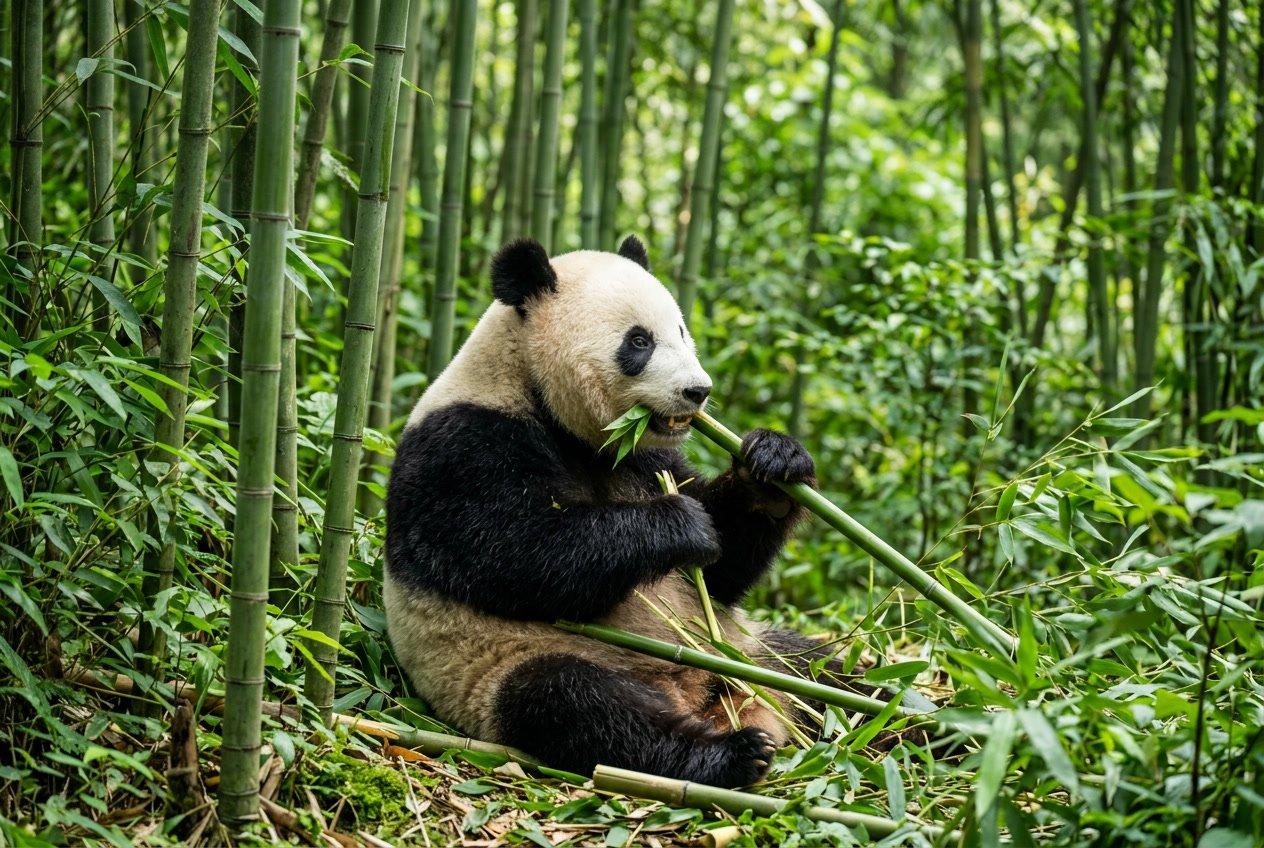
Although giant pandas belong to the order Carnivora, their diet consists almost entirely of bamboo.
They eat bamboo leaves, stems, and tender shoots, selecting different parts depending on the season and availability.
Their feeding adaptations include powerful jaws, broad molars, and a special wrist bone that functions like a thumb, allowing them to grip bamboo stalks.
Because bamboo provides relatively little usable energy and pandas retain a digestive system resembling that of carnivores, they must eat large quantities throughout the day.
A panda may spend 10–16 hours daily feeding and foraging.
National Zoo
+1
3. Daily Life and Behavior
Despite their cuddly appearance, adult pandas are usually solitary animals.
They spend most of their time moving between feeding areas, eating bamboo, and resting. They communicate through scent markings and vocalizations, particularly during the breeding season.
Giant pandas are also surprisingly capable climbers. Their strong legs and sharp claws help them climb trees, while younger pandas are particularly playful and curious.
Unlike many other bear species, giant pandas do not undergo prolonged winter hibernation. Instead, they can move to lower elevations when seasonal conditions make food more accessible.
4. Giant Panda Cubs and Reproduction


12
Giant panda reproduction is one of the greatest challenges facing the species.
Female pandas generally have a very short fertile period each year, typically lasting only two or three days.
After mating, birth may occur roughly 90–180 days later because implantation can be delayed.
Newborn panda cubs are extremely small, typically weighing around 85–140 grams. They are pink, nearly hairless, blind, and completely dependent on their mothers.
Cubs can remain with their mothers for approximately 18 months to three years. This extended period of care means females reproduce relatively slowly.
National Zoo
+1
5. Conservation: Protecting the Giant Panda

The giant panda is one of conservation’s most encouraging success stories.
Once officially classified as Endangered on the IUCN Red List, the species was reclassified as Vulnerable in 2016 following improvements in its population and habitat protection.
The Smithsonian National Zoo cites an estimate of approximately 1,864 giant pandas in the wild, based on China’s earlier national survey. This is a historical survey estimate, not a new 2026 census.
National Zoo
+1
Nevertheless, several serious challenges remain:
- Habitat fragmentation: Roads, construction, and other development can separate populations.
- Climate change: Changing temperatures and rainfall patterns may alter the distribution of bamboo.
- Limited reproduction: Slow breeding makes population recovery difficult.
- Small, isolated populations: Restricted movement can reduce genetic diversity.
Conservation programs focus on protecting mountain forests, connecting isolated habitats through wildlife corridors, scientific monitoring, and carefully managed breeding programs.
6. Why Giant Pandas Matter
Protecting giant pandas helps conserve entire forest ecosystems.
The same mountain forests provide habitats for numerous birds, mammals, insects, and plants. Panda conservation therefore benefits much more than a single species.
Their international popularity also makes giant pandas important ambassadors for biodiversity conservation.
7. Five Fascinating Giant Panda Facts

1. They have a false thumb.
An enlarged wrist bone helps them grasp bamboo, functioning almost like an extra finger.

2. They spend much of the day eating and resting.
Their low-energy bamboo diet requires extensive feeding and frequent rest.

3. They are excellent climbers.
Even young cubs can become skilled at climbing trees.

4. Their babies are incredibly tiny.
A newborn cub weighs only a small fraction of its mother’s body weight.

5. Their distinctive markings remain a scientific mystery.
Researchers have proposed explanations involving camouflage and communication, but the full evolutionary story remains under investigation.
Conclusion
The giant panda represents both the beauty and fragility of the natural world. Its unusual bamboo diet, solitary lifestyle, and delicate reproductive cycle make it an extraordinary species.
Decades of conservation have helped improve its prospects, demonstrating that protecting habitats and supporting scientific research can make a meaningful difference.
Yet its survival is not guaranteed. Continued protection of China’s mountain forests remains essential to ensuring that future generations can experience this remarkable bear.
SEO Details for Bin3aiah Animals
SEO title
Giant Panda: Life, Diet, Habitat and Conservation
Copy
Meta description
Discover how giant pandas live, what they eat, where they thrive, and the conservation efforts protecting these remarkable bears in China.
Copy
Suggested URL slug
giant-panda-life-diet-conservation
Focus keywords
Giant panda, panda diet, giant panda habitat, panda conservation, panda cubs, bamboo forests.
Suggested category
Animals → Mammals → Bears
Scientific references: Smithsonian National Zoo – Giant Panda and Giant Panda Conservation FAQs.
Editorial status: Article prepared for Bin3aiah Animals. Not published to WordPress.