


Views: 0
BIN3AIAH ANIMALS | WILDLIFE FEATURE
African Elephant: Intelligence, Memory and Family


12
Discover the remarkable intelligence, extraordinary memory, powerful emotions, and lifelong family bonds of Africa’s largest land animal.
The African elephant is more than a giant of the savanna. Behind its enormous ears, powerful trunk, and impressive tusks lies one of the animal kingdom’s most sophisticated minds.
Elephants recognize familiar individuals, maintain complex social relationships, cooperate to protect their young, and use experience to navigate changing environments. Their lives reveal a fascinating world in which learning, communication, and family relationships are essential for survival.
1. Meet the African elephant
Africa is home to two recognized elephant species: the African savanna elephant (Loxodonta africana) and the African forest elephant (Loxodonta cyclotis).


African savanna elephant
The largest living land animal, found in grasslands, savannas and woodlands.

African forest elephant
A smaller species adapted to the dense tropical forests of Central Africa.
| Characteristic | African savanna elephant |
|---|---|
| Scientific name | Loxodonta africana |
| Adult male weight | Commonly 4,000–6,000 kg |
| Shoulder height | Up to around 4 m |
| Lifespan | Often 60–70 years |
| Diet | Herbivore |
| Gestation | Approximately 22 months |
| Social system | Matriarchal family groups |
| Conservation status | Endangered |
The African forest elephant is separately classified as Critically Endangered.

IUCN
+1
2. Intelligence: the extraordinary elephant mind
Elephants are widely recognized for their advanced social intelligence. They learn through experience, investigate unfamiliar objects, coordinate their behavior, and communicate with other members of their group.
Their intelligence is particularly apparent in three areas:
- Problem-solving: Using their trunks and physical surroundings to reach food, manipulate objects, and overcome obstacles.
- Social awareness: Recognizing other elephants and adjusting their behavior based on relationships and circumstances.
- Learning: Young elephants acquire important skills by observing and interacting with experienced adults.
Intelligence in elephants is not simply about solving puzzles. It is deeply connected to life in a complex social environment.
3. Memory: why elephants remember


The familiar saying that an elephant never forgets exaggerates a real biological ability: elephants can retain important information over long periods.
Memory helps elephants recognize familiar companions, distinguish potential threats, and draw upon previous experiences.
Experienced matriarchs can be particularly valuable during environmental challenges. Knowledge accumulated across years may help families make decisions about movement, food, and water.
Research also provides evidence of long-term social memory. A study involving two African savanna elephants in human care found stronger interest in sensory cues from familiar keepers they had not seen for 13 years than in cues from unfamiliar people. That is a striking result, although the sample was very small.
Wiley Online Library
4. Family: the power of the matriarch


For African savanna elephants, family is central to life.
A typical core family consists of related adult females and their dependent offspring. Female relatives may remain associated for decades, while males generally become more independent as they mature.
The family is often led by a matriarch, usually an older, experienced female.
She contributes to decisions about movement, responses to danger, and social interactions. Her experience can provide an advantage when the herd faces unfamiliar challenges.
Elephant families also form broader social networks. Groups may separate into smaller units and reunite, maintaining bonds beyond their immediate family.
5. Motherhood and raising calves


12
Elephant motherhood involves one of the longest pregnancies among land mammals, lasting approximately 22 months.
Newborn calves typically weigh around 90–120 kg. They are able to stand relatively soon after birth but remain dependent on their mothers for nourishment, protection, and guidance.
Other females, sometimes called allomothers, may help supervise calves. Older siblings and relatives can provide social contact and contribute to their development.
A young elephant learns how to use its trunk, understand social signals, find food, and respond to danger through years of practice.
These relationships show why protecting an elephant population requires more than simply preserving a certain number of animals: maintaining stable social groups also matters.
6. Communication: a language of rumbles and touch

Elephants communicate through low-frequency rumbles, trumpets, body movements, chemical signals, and physical contact.
Some rumbles contain frequencies below the normal range of human hearing. Low-frequency communication can help elephants maintain contact across substantial distances.
One especially fascinating discovery came in 2024. Researchers studying wild African elephants in Kenya found evidence that they use individually specific, name-like calls to address one another.
The findings suggest that elephants can address particular individuals without merely imitating the recipient’s voice. Scientists are still investigating how these vocal labels develop and how widely elephants use them.
Nature Ecology & Evolution
+1
7. Emotions, comfort and loss
Elephants display behavior consistent with strong social attachments.
They may comfort distressed companions through touch, coordinate defensive behavior around vulnerable calves, and show unusual attention to the remains of deceased elephants.
Researchers have documented elephants examining and investigating bones and carcasses, sometimes with repeated trunk contact.
Such behavior raises important questions about elephant awareness of death and loss. Although people often describe these reactions as grief, scientists are careful about drawing direct comparisons with human emotional experiences.
What is clear is that elephant relationships are complex and can persist for many years.
8. Why African elephants are essential to nature


Elephants are often called ecosystem engineers because their activities change the habitats around them.
As they move through the landscape, they disperse seeds through their dung, create pathways, and influence vegetation by feeding on trees and shrubs.
In some habitats, their digging can expose water that other animals subsequently use.
These effects help shape African ecosystems and influence the opportunities available to other species.
9. Conservation: protecting elephants and their families
Despite their strength, African elephants face serious threats.
Ivory poaching, habitat destruction, fragmented migration routes, and conflict with people all affect elephant populations.
Conservation programs work to protect habitats, reduce illegal killing, support wildlife corridors, and promote safer coexistence between local communities and elephants.
A 2025 IUCN assessment reaffirmed the Critically Endangered status of African forest elephants, underscoring the continuing need for protection.
IUCN
Safeguarding elephants also helps protect the family bonds, accumulated knowledge, and ecological relationships that make these animals extraordinary.
Conclusion
African elephants demonstrate that intelligence takes many forms. Their ability to learn, remember, communicate, and maintain long-lasting social relationships is fundamental to their survival.
Every matriarch carries experience. Every calf depends on years of guidance. Every family represents a living network of relationships.
Protecting African elephants means preserving not only an iconic species, but also one of nature’s most remarkable social worlds.
Publication and SEO package
ANIMALS-004
Content ready
Target: animals.bin3aiah.net
SEO title
African Elephant: Intelligence, Memory and Family
URL slug
african-elephant-intelligence-memory-family
Meta description
Discover African elephant intelligence, remarkable memory, complex communication, family bonds and the importance of protecting these gentle giants.
Focus keyword
African elephant intelligence
Secondary keywords
Elephant memory, elephant family structure, elephant communication, elephant matriarch, African elephant facts.
Categories
Wildlife, Mammals, African Animals
Suggested tags
African Elephant, Elephant Intelligence, Elephant Memory, Elephant Family, Wildlife Conservation
Media resources for the publisher

Suggested featured image
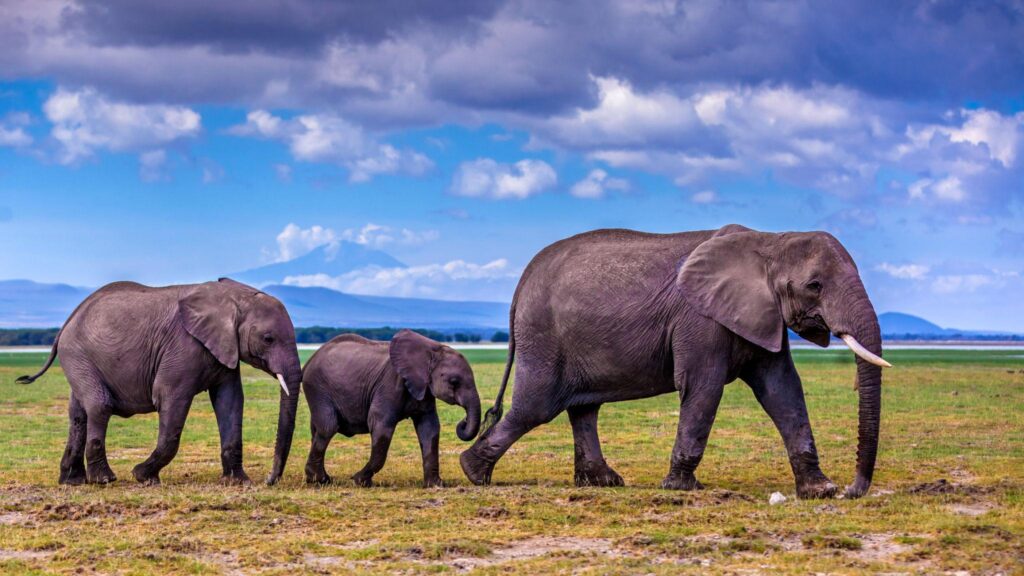
African elephant mother with her calf.
Use a properly credited photograph, ideally in 16:9 format.Licensed Wikimedia photo

Additional media collections include elephant calf photographs and elephant communication recordings and videos. Check reuse permissions for each photograph or video before publishing.
Research references
- ElephantVoices — Elephant Intelligence
- Nature — Individual Name-Like Calls (2024)
- IUCN — African Elephant Conservation Status
- ElephantVoices — Behavioral Video Library
Publication status: Article and SEO details prepared. Media selection and WordPress publication have not been completed or verified.